
Most people assume that walking into any tattoo studio in Los Angeles delivers roughly the same experience. You pick a design, sit in a chair, and leave with ink. But that assumption leaves out everything that makes a tattoo truly yours. A genuinely client-centered studio operates on a fundamentally different philosophy, one where your vision, comfort, and long-term satisfaction shape every decision. If you've ever left a session feeling like your input didn't quite land, or like the process moved faster than you were ready for, this article is for you.
Table of Contents
- Defining a client-centered tattoo studio
- How the collaborative tattoo design process works
- Why safety, consent, and comfort matter just as much
- Client-centered tattoo studios vs. traditional studios
- The real reason client-centered studios are changing LA tattoo culture
- Experience the client-centered difference at The Sunroom LA
- Frequently asked questions
Key Takeaways
| Point | Details |
|---|---|
| Client input is central | A client-centered studio invites your ideas and works with you throughout the design process. |
| Safety is a priority | Strict hygiene, consent, and private environments are non-negotiable in top LA studios. |
| Collaboration builds trust | Open communication and real-time design feedback set the stage for an artwork you'll love now and in the future. |
| Aftercare support matters | Client-centered studios provide clear instructions and guidance for long-lasting results. |
Defining a client-centered tattoo studio
The phrase "client-centered" gets used loosely in many service industries, and tattooing is no exception. In its truest form, a client-centered tattoo studio is one where the client's needs, preferences, and comfort actively guide the entire experience from the first message to the final healed result. It is not simply about being friendly or offering a wide menu of styles. It is about building a process that genuinely responds to you.
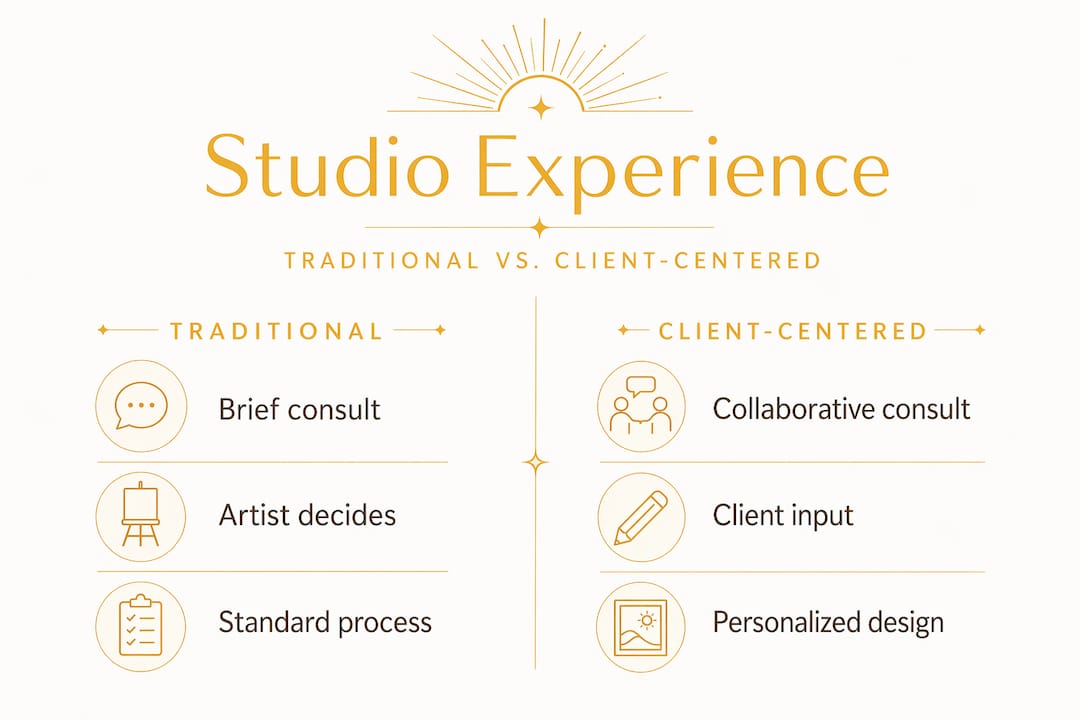
The clearest distinction between a standard studio and a client-centered one shows up in how design decisions are made. In a traditional setup, the artist often leads with their preferred style, and the client adapts. In a client-centered studio, the artist and client work together from the start. Client-centered studios commonly use a design workflow that emphasizes back-and-forth discussion about placement, size, and style during the early stages of the design process. That shift in authority changes everything.
Here are the signature features you should expect from a genuinely client-centered studio:
- Collaborative design consultations where your references and ideas are taken seriously from day one
- Respect for privacy, including private rooms or one-on-one sessions rather than a busy open floor
- Real-time design feedback, meaning you can see and respond to drafts before your appointment
- Clear communication about timelines, pricing, and what to expect at each stage
- Flexibility, so that if your vision evolves, the process can evolve with it
| Aspect | Traditional studio | Client-centered studio |
|---|---|---|
| Consultation style | Brief, artist-led | In-depth, collaborative |
| Flexibility | Limited after booking | Ongoing throughout process |
| Client involvement | Minimal in design phase | Active co-creator |
| Privacy | Open floor, shared space | Private or semi-private settings |
| Outcome focus | Completion of session | Long-term satisfaction |
The table above makes the difference concrete. It is not about one being "better" in a generic sense. It is about which environment actually supports the kind of tattoo experience you are looking for.
How the collaborative tattoo design process works
Now that we know what a client-centered studio is, let's see how their design process invites you in as a co-creator.
The process in a high-quality, client-centered studio follows a clear and intentional sequence. Each step is designed to give you more confidence and reduce the uncertainty that makes many people nervous about getting tattooed.
- Initial contact and intake: You reach out with your concept, whether it's a clear idea or just a feeling. The studio collects information about your vision, preferred style, and any reference images you have gathered.
- Consultation: A dedicated conversation with your artist. This is where placement, size, and style are discussed in real depth. No rushing.
- Collaborative design drafting: The artist creates initial sketches or digital drafts based on your consultation. You review, respond, and request adjustments.
- Design approval: You confirm the final design before your session is booked. Nothing is finalized without your explicit sign-off.
- Session setup and booking: With the design approved, your appointment is scheduled with all details confirmed, including session length and any prep instructions.
- Post-session support: Aftercare guidance is provided, and follow-up check-ins are standard practice.
Clients arrive with clearer ideas and reference images and expect transparency and real-time adjustments to tattoo design considerations like placement, size, and style. The best studios meet that expectation head-on.
"The difference is not whether clients have input, but how authority, trust, and iterative design adjustments are handled."
That distinction matters enormously. Any studio can claim to "listen." A client-centered studio builds listening into the actual structure of its workflow.
Pro Tip: Arrive at your consultation with at least three to five reference images that reflect the mood, line weight, and placement you have in mind. The more specific your references, the more precisely your artist can translate your vision into a design that fits your body and your style.
Transparency is also a key part of this process. When artists explain why they recommend a certain placement or line thickness, you gain real knowledge about your own tattoo. That kind of open communication builds trust and helps you feel genuinely involved rather than just a passive recipient of someone else's art.
Why safety, consent, and comfort matter just as much
Beyond the creative side, client-centered studios set themselves apart by how they keep you safe and respected before, during, and after your session.

A client-centered approach to tattooing is not only about design collaboration. It also means holding a high standard for safety, consent, and physical comfort throughout the entire experience. Client-centered care implies attention to safety and consent hygiene practices that protect both client and practitioner, including sterilization and the provision of clear consent and aftercare information. These are not optional extras. They are foundational to a professional, ethical studio.
Sterilization is non-negotiable. Every needle, every tube, every surface that contacts your skin should be properly sterilized or single-use. A studio that takes client-centered care seriously will be transparent about its hygiene protocols without you having to ask.
Consent is equally important. Before any work begins, you should receive a clear explanation of the process, the risks, and what aftercare will require from you. Consent forms are standard in reputable studios, and they signal that the studio takes your informed participation seriously.
Here is what you should expect as a client in a truly client-centered environment:
- Private rooms or screened spaces that protect your personal space and allow you to relax
- Respectful communication throughout, including checking in during the session about your comfort level
- Access to clear aftercare guidance, both verbal and written, so you know exactly how to protect your investment
- Honest risk communication, including what to watch for during healing and when to seek medical advice
- A welcoming environment that does not rush you or pressure you into decisions
Aftercare is often underestimated. A tattoo that heals well looks dramatically better long-term than one that was technically well executed but poorly cared for. Client-centered studios understand this and treat aftercare as part of their service, not an afterthought.
Client-centered tattoo studios vs. traditional studios
Understanding the contrast makes it easier to see which environment will support your best tattoo experience.
In practice, "client-centered" in tattooing maps to four clear pillars: intentional, collaborative consultations; clear communication and expectation-setting; a comfortable, respectful studio environment; and process guidance that helps the tattoo adapt to the client's body and the tattoo's long-term aging needs.
| Attribute | Traditional studio | Client-centered studio |
|---|---|---|
| Consultation style | Brief, often standardized | Personalized and in-depth |
| Environment | Open, high-traffic floor | Private, calm, curated space |
| Privacy | Shared with other clients | One-on-one or semi-private |
| Aftercare support | Basic verbal instructions | Detailed written and follow-up support |
| Result longevity | Dependent on client's own research | Guided by artist expertise and placement advice |
In Los Angeles specifically, privacy and personalization carry extra weight. The city's clientele is sophisticated and accustomed to high-touch experiences across industries, from fashion to wellness to hospitality. That same standard is now being applied to tattooing. Clients here are not just looking for a skilled hand. They want an experience that respects their time, their vision, and their body.
Long-term tattoo satisfaction is also closely tied to how much input you had in the design process. When you understand why certain placements work better for your skin type, or why a particular line weight will hold up over time, you make better decisions. Those decisions lead to tattoos you love for decades, not just weeks.
Pro Tip: When you're evaluating studios, ask directly about their aftercare protocols and whether they offer private sessions. The way a studio answers those questions tells you a great deal about their actual values, not just their marketing.
The real reason client-centered studios are changing LA tattoo culture
Here's what most discussions miss about why this matters in the LA tattoo scene.
The rise of client-centered studios in Los Angeles is not a marketing trend. It is a direct response to a shift in how people relate to personal services across the board. Clients who have experienced truly personalized care in other areas of their lives, whether in medical settings, custom fashion, or premium wellness, arrive at tattoo studios with higher expectations. And they are right to have them.
What most conversations about client-centered tattooing overlook is the emotional dimension. Getting a tattoo is an act of permanence. It is one of the few decisions you make that literally stays with you. That level of commitment deserves a process that takes you seriously as a person, not just as a booking slot.
"The studios that are genuinely changing LA's tattoo culture are not just offering better designs. They are offering a different kind of relationship between artist and client, one built on trust, transparency, and mutual respect for the art."
Long-time artists who have embraced more open consultation styles often report that their work improves as a result. When a client can articulate what they want clearly, and when the artist truly listens, the final piece reflects something real. It is not a generic design applied to a body. It is a collaboration that carries meaning for both people involved.
There is also a practical argument for this approach. Tattoos done with careful placement guidance and thorough aftercare support simply age better. They hold their lines, retain their detail, and remain legible for years longer than work done without that foundation. Client-centered studios are not just selling a better experience in the moment. They are delivering a better result over time.
The broader shift in LA's creative scene reflects this same value. Artists across disciplines are moving toward more collaborative, client-responsive models because the work that comes out of genuine partnership is consistently stronger. Tattooing is no different.
Experience the client-centered difference at The Sunroom LA
If you're looking to put this philosophy into action, here's the next step.
At The Sunroom LA, every aspect of the studio is designed around the principles covered in this article. From your first consultation to your final healed result, the process is built to put your vision, comfort, and long-term satisfaction at the center.
Our artists are committed to genuine collaboration, taking the time to understand your references, your placement preferences, and the story behind your idea before a single line is drawn. You can meet our artists and explore their portfolios to find the right creative partner for your vision. For those seeking something truly unique, our guest artist sessions bring exceptional talent through the studio on a rotating basis. And when your session is complete, our detailed tattoo aftercare support ensures your work heals beautifully and lasts.
Booking a private session at The Sunroom LA means choosing a studio where the standard is not just technical skill. It is a complete, personalized experience from start to finish.
Frequently asked questions
What should I bring to a client-centered tattoo consultation?
Bring reference images, ideas for placement and size, and be ready for a collaborative conversation about design. Clients with clearer references and transparency expectations get the most from these sessions.
How do client-centered studios handle hygiene and aftercare?
They use sterilized equipment and provide consent forms and detailed aftercare instructions for your safety. Client-centered care implies attention to safety and consent hygiene practices that protect both client and practitioner.
Are client-centered studios only for custom tattoos?
While they excel at bespoke work, you can also get flash or pre-designed tattoos in a more tailored, private setting where your comfort and preferences still guide the experience.
What makes the experience more private or comfortable?
Studios may offer private rooms, one-on-one consultations, and a focus on respect for your preferences and boundaries. Client-centered studios emphasize collaborative, private, and respectful environments throughout the entire process.
How can I make sure my tattoo ages well?
Choose a studio that discusses your skin, placement, and aftercare options. Process guidance for long-term aging is a core feature of genuinely client-centered care, and it makes a visible difference over time.