

You already know the difference between a tattoo pulled from a binder and one drawn specifically for you. Art-savvy Angelenos are not looking for something off a wall. They want a design that reflects their personal aesthetic, their story, their taste. But wanting a one-of-a-kind tattoo and actually getting one are two different things. The commissioning process can feel unclear, especially when it comes to understanding what you're paying for, how to communicate your vision, and how to protect both yourself and your artist. This guide walks you through every step so you can approach the process with confidence.
Table of Contents
- What to know before commissioning tattoo artwork
- Essential materials and steps for commissioning your tattoo
- Avoiding common pitfalls when commissioning tattoo designs
- How to confirm and finalize your commissioned design
- A fresh perspective on commissioning original tattoo artwork
- Ready for your one-of-a-kind tattoo? Work with LA's top artists
- Frequently asked questions
Key Takeaways
| Point | Details |
|---|---|
| Set clear expectations | Clarify if the design fee is separate and request an itemized quote before commissioning. |
| Be prepared | Gather inspiration and details to communicate your vision clearly for the artist. |
| Respect the process | Compensate artists for both design time and tattoo application to support original artistry. |
| Confirm ownership | Discuss and agree on rights to the design and revision rounds before finalizing. |
What to know before commissioning tattoo artwork
Once you recognize the importance of a truly original tattoo, it's crucial to know what commissioning means and what you'll need to clarify beforehand.
"Commissioning" in the tattoo world is not one-size-fits-all. It can mean two very different things depending on the artist and the arrangement you agree to. In some cases, commissioning covers only the creation of a custom design, a drawing or digital illustration that you then take to any artist for application. In other cases, the commission covers both the design and the tattooing, handled by the same artist from concept to skin. Knowing which arrangement you're entering is essential before any money or time is exchanged.
This distinction matters more than most clients realize. As noted in a Reddit tattoo community discussion, some artists and clients believe design and tattooing are bundled, while others value and charge separately for the design process. Misaligned expectations here are one of the most common sources of frustration on both sides. You may assume the design is included in your session price. Your artist may assume they're being paid separately for hours spent sketching. That gap leads to awkward conversations, delayed appointments, and sometimes damaged relationships.
Before you commit to anything, ask yourself and your artist these key questions:
- Is the design fee separate from the tattoo session fee?
- Will you receive a digital file or physical drawing of the design?
- Does the artist retain ownership of the design after completion?
- How many revision rounds are included in the quoted price?
- What happens if you decide not to get the tattoo after the design is complete?
Original artwork is also fundamentally different from flash. Flash designs are pre-drawn pieces that an artist offers to multiple clients. They're efficient and often beautiful, but they're not made for you. A commissioned design is created from scratch based on your input, your reference materials, and your artist's interpretation. That creative labor takes time, skill, and focused attention.
Pro Tip: Always request an itemized quote before finalizing any commission. Ask your artist to break down what the design fee covers, how many hours they estimate for the artwork, and what the tattooing session costs separately. This protects you from surprise charges and shows your artist that you respect their professional process.
Essential materials and steps for commissioning your tattoo
With those definitions and expectations in mind, you'll want to gather the right materials and understand the full process for approaching an artist with your idea.
Walking into a commission conversation unprepared wastes everyone's time. The more clearly you can communicate your vision, the better your artist can translate it into something that exceeds your expectations. Here's what to gather before your first conversation:
- Visual references: Screenshots, photos, saved posts, or printed images that capture the style, mood, or elements you want. These do not need to be tattoo images. Art prints, fashion editorials, botanical illustrations, and architectural details all work.
- Placement details: Know where on your body you want the tattoo and have a general sense of the size you're envisioning.
- Budget range: Be honest about what you're prepared to spend, including the design fee and the session cost.
- Schedule flexibility: Custom work takes time. Be ready to wait weeks or even months for an artist whose style matches your vision.
- Written notes: A short description of the concept, including any symbolic meaning, elements you want included or avoided, and the overall feeling you're going for.
Here's a clear breakdown of what each party brings to the commission:
| What you provide | What the artist provides |
|---|---|
| Visual references and inspiration | Original sketch or digital design |
| Concept description and intent | Creative interpretation and artistic style |
| Placement and size preferences | Technical knowledge of how design translates to skin |
| Budget and timeline | Estimated hours and itemized pricing |
| Feedback during revision rounds | Revisions within agreed scope |
| Deposit to secure the commission | Final artwork and tattoo application |
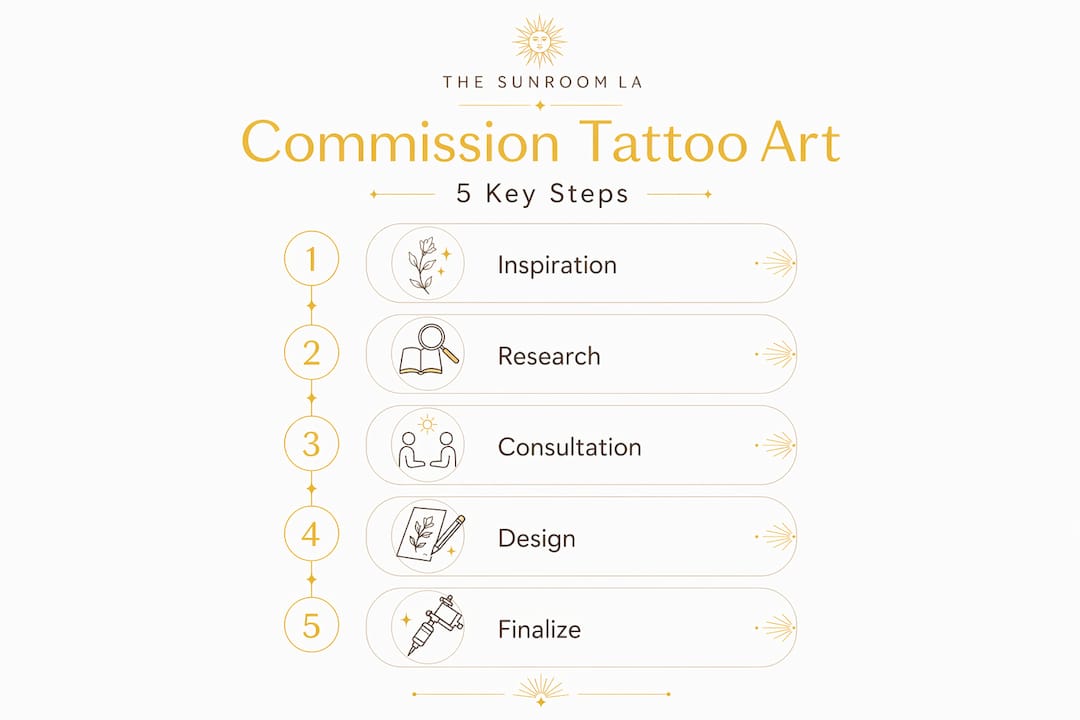
Once you have your materials ready, follow this step-by-step process:
- Research artists whose style matches your vision. Review portfolios carefully. Fine line artists, illustrative artists, and blackwork artists all work very differently. Choose someone whose existing work already excites you.
- Reach out with a clear, respectful inquiry. Send a concise message that includes your concept, placement, size, and style preferences. Attach two to three reference images. Keep it focused.
- Ask about their commission process upfront. Find out how they handle design fees, revision rounds, and ownership rights before agreeing to anything.
- Confirm the quote and pay the deposit. Most artists require a deposit to begin design work. This is standard and protects their time.
- Review the initial draft and provide clear feedback. Be specific. "I love the floral detail but would like the stem to curve more to the left" is far more useful than "can you make it feel more natural?"
- Approve the final design and book your session. Once both parties are satisfied, sign off and lock in your appointment.
As noted in a Reddit tattoo community discussion, design time is professional labor, and discussing itemization with your artist upfront sets a respectful tone for the entire collaboration.
Pro Tip: Gather visual inspiration from sources you personally own or have saved, and avoid asking your artist to replicate another tattoo artist's work directly. Reference the mood and style, not the exact design. Intellectual property matters in the tattoo world, and skilled artists will appreciate that you understand the difference.

Avoiding common pitfalls when commissioning tattoo designs
Now that you've got your materials and a roadmap, it's wise to learn from the mistakes of others who have commissioned original artwork before you.
Even well-intentioned clients make mistakes that slow the process, strain the artist relationship, or lead to a design they're not happy with. The most costly errors are usually the ones that happen before the needle ever touches skin.
"Professional etiquette means compensating your artist's design time. They're not just selling their linework, but their ideas."
This is a principle that the tattoo community is increasingly vocal about, and for good reason. As different expectations between artists and clients can lead to real issues, aligning on scope and compensation at the very start is not optional. It's essential.
Here are the top five pitfalls to avoid:
- Assuming the design is free. Many clients expect the design to be included in the tattoo price. Unless explicitly stated, it usually is not. Ask before assuming.
- Providing too little direction or too much. Giving an artist zero guidance leads to a design that may miss your vision entirely. Giving them a rigid, over-detailed brief can stifle their creativity. Find the balance.
- Skipping the written agreement. Even a simple email confirmation of the scope, price, revision rounds, and ownership terms protects both parties. Do not rely on verbal agreements alone.
- Missing the deposit deadline. Artists often move on to other clients if a deposit is not received within the agreed window. If you're serious, pay promptly.
- Ghosting after receiving the design. If you decide not to move forward, communicate that clearly and promptly. Disappearing after an artist has invested hours in your design is disrespectful and damages trust in the broader community.
Respecting your artist's creative process also means understanding that their style is their intellectual property. Asking them to copy another artist's design, even as a "reference," puts them in an uncomfortable position and can undermine the originality you're paying for.
How to confirm and finalize your commissioned design
Having avoided major pitfalls, your final task is to confirm, revise, and lock in your original tattoo design the right way.
The revision and approval stage is where many commissions either come together beautifully or start to unravel. Clear communication at this point is just as important as it was at the beginning. When you receive your initial draft, take time to review it carefully before responding. Look at it in different lighting. Sleep on it. Consider how it will look on the specific placement you've chosen.
Here's how to move from draft to final design with confidence:
- Review the draft against your original brief. Does it capture the elements you requested? Does the style feel consistent with what you discussed?
- Write out your revision notes clearly. Use specific language about what to change and what to keep. Reference the draft directly, for example, "the top-right floral cluster is perfect, but I'd like the center element to be slightly larger."
- Confirm the number of revisions included. Most artists allow one or two rounds. If you need more, expect an additional fee. Factor this into your budget.
- Discuss ownership and usage rights explicitly. Will you receive a digital file? Can you share the design on social media? Can the artist use it in their portfolio? These are all worth confirming in writing.
- Sign off formally and pay the remaining balance or session deposit. A clear, written sign-off protects both you and your artist. It confirms that you've approved the design and are ready to proceed.
- Book your tattoo appointment and prepare for your session. Follow any aftercare or pre-care instructions your artist provides.
As highlighted in a Reddit tattoo community discussion, asking for an itemized explanation upfront helps align expectations and ensures all labor, including revision time, is covered in your agreement.
Pro Tip: Get every agreement in writing, even for small details. A quick email summary after a verbal conversation works perfectly. Something as simple as "Just confirming we agreed on two revision rounds included in the design fee" can prevent significant misunderstandings down the line.
A fresh perspective on commissioning original tattoo artwork
There is a cultural shift happening in the tattoo world, and Los Angeles is at the center of it. The conversation about whether design work should be bundled with the tattoo session or compensated separately has moved from artist-only forums into mainstream client conversations. That shift matters.
For a long time, clients assumed that paying for a tattoo meant paying for everything, the consultation, the design, the application, and the aftercare advice. But as the tattoo industry has matured into a recognized art form, artists are pushing back on that assumption. And rightfully so. A skilled illustrator who creates a custom botanical sleeve is doing the same creative work as a freelance graphic designer or a commissioned painter. The fact that the art ends up on skin does not diminish the intellectual and creative labor involved.
The debate around whether design work should be included or separately compensated has become central to respecting tattoo artists as professionals. We believe this conversation is one of the healthiest things to happen to the industry in years. It raises the standard for everyone.
What we've noticed in the LA tattoo community specifically is that clients who understand and respect this distinction tend to get better results. When you approach an artist as a collaborator rather than a service provider, the dynamic changes. You get more creative investment, more honest communication, and ultimately, a better tattoo. The artists who work in boutique, private studio environments are particularly attuned to this. They have chosen a model that prioritizes depth of relationship over volume of clients.
If you're serious about commissioning original artwork, treat the design phase with the same weight you give the tattooing itself. That mindset shift is what separates a truly bespoke tattoo experience from a transaction.
Ready for your one-of-a-kind tattoo? Work with LA's top artists
If you're inspired to bring your own original tattoo vision to life, The Sunroom LA offers seamless access to skilled local and guest artists who specialize in fine line and custom work.
Working with a curated boutique studio means every artist in the space has been selected for their craftsmanship, their creative range, and their commitment to personalized service. You can browse LA tattoo artists whose portfolios reflect the kind of original, art-focused work this guide has been about. The studio also regularly hosts guest tattoo artists whose styles bring fresh perspectives and specialized techniques to the space. Whether you have a fully formed concept or just a starting point, commission your tattoo at The Sunroom and experience what a truly private, personalized tattoo session feels like from the first consultation to the final reveal.
Frequently asked questions
How much should I expect to pay for original tattoo artwork?
Expect to pay a separate design fee based on the artist's hourly rate and the complexity of your request, since design time is professional labor and must be compensated in addition to the tattoo session cost.
Can I keep or reuse my commissioned tattoo design?
Design ownership varies by artist, and while most allow you to use it as a tattoo, further reproduction or resale is typically restricted unless you align on ownership rights upfront in a written agreement.
What if I'm not happy with the initial design?
Most artists include one or two revision rounds in their commission fee, but extra changes may cost more, so ask for an itemized explanation of the revision policy before the design process begins.
Is it disrespectful to ask multiple artists for design sketches?
Yes, this is generally frowned upon in the tattoo community. Professional etiquette and respect for an artist's labor means working with one artist at a time and compensating them properly for their creative effort.